
Solar shading: the first step to summer comfort
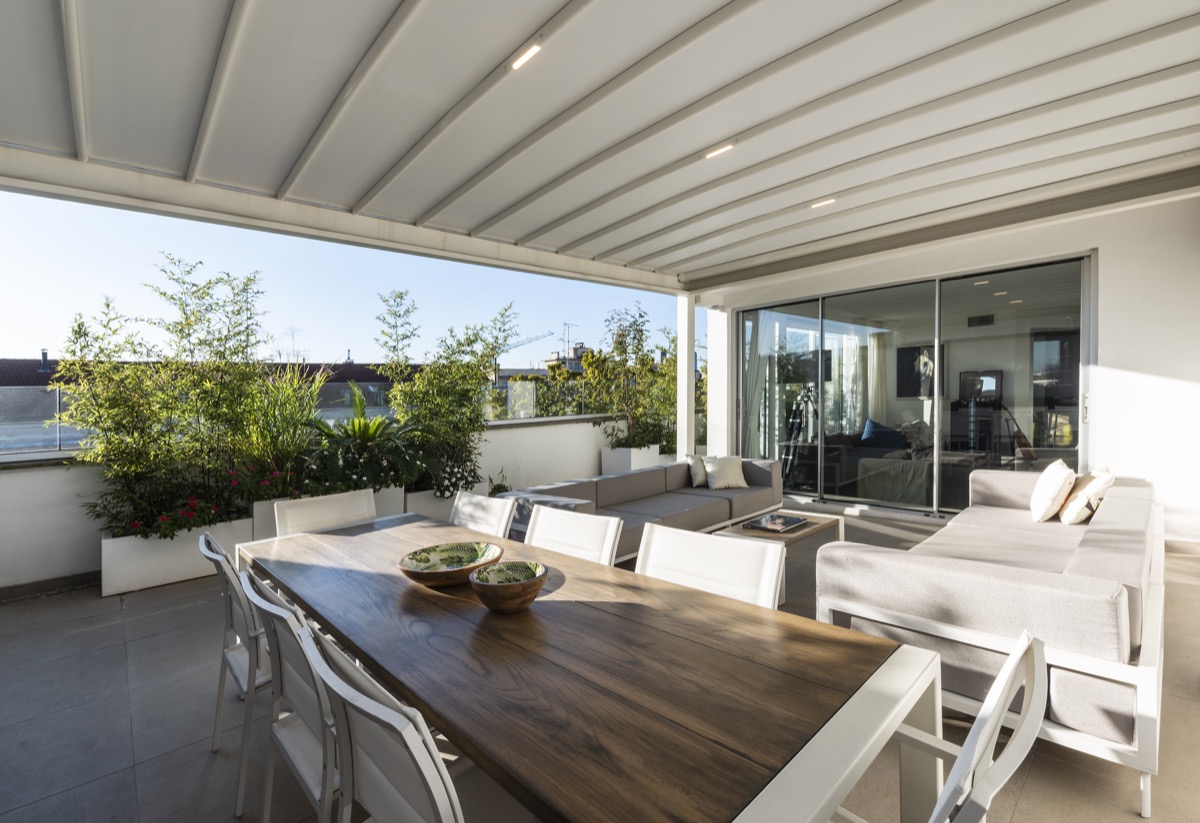
First shading, then – only if necessary – active cooling.
A simple sequence, but increasingly strategic.
European summers are changing: high temperatures and heatwaves are now a constant. In this scenario, ensuring indoor comfort without increasing energy consumption is essential. The key is to anticipate heat, not chase it.
Block the sun before it enters
Solar shading represents the first level of protection: a concrete and sustainable solution that acts externally, intercepting solar radiation before it passes through glazed surfaces and turns into heat inside.
Bioclimatic pergolas, retractable fabric pergolas and vertical shading systems are designed to create a dynamic barrier between light and living spaces. Systems that adjust according to sunlight intensity, time of day and season, naturally adapting to different needs.
Solutions such as Alba or Maestro, with adjustable louvers, allow light modulation and promote ventilation, while Pergotenda® provides effective and flexible protection, extending comfort outdoors.
It is not just about shade, but about conscious control of light and climate.
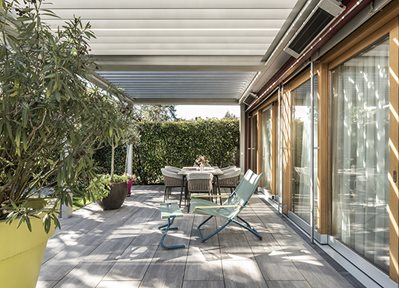
Keeping heat out while enhancing space
Limiting direct solar gain means maintaining a more stable indoor temperature, improving comfort without immediately relying on air conditioning and reducing energy consumption.
The integration of vertical closures enhances this effect: spaces become more protected, with calibrated light control and visual permeability towards the outdoors, ensuring continuity with the surrounding environment while managing climatic impact.
This is where design makes the difference.
Every Corradi solution is based on careful analysis of context: exposure, orientation, architecture. Solar shading is not an accessory, but an integral part of spatial design and usability over time.
Natural comfort, even without active systems
Comfort also comes from simple daily actions.
During the hottest hours, when the sun directly hits glazed surfaces, keeping shading and blinds lowered reduces solar radiation and heat gain, preventing overheating.
In the evening, when outdoor temperatures drop, opening shading systems and windows promotes natural ventilation, dissipating accumulated heat and restoring comfort.
This alternation – protecting during the day, ventilating in the evening – is the basis of passive cooling: an intuitive approach balancing architecture and environment, reducing the need for mechanical systems.
Active cooling, such as air conditioning, remains valuable but secondary. When shading is properly designed and used, its need is significantly reduced, benefiting efficiency, energy consumption and living quality.
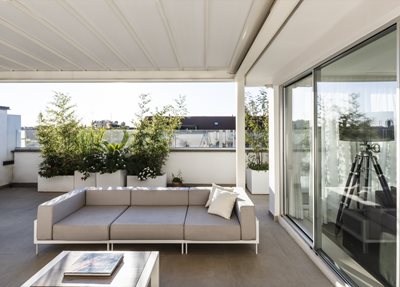
A value throughout the year
Solar shading is inherently dynamic: it protects interiors in summer and, in colder months, if properly managed, allows solar gains to support natural heating.
Every space is different, so there is no single solution.
Corradi supports designers and clients in developing tailored solutions where aesthetics and function come together to create living spaces for every season.
This article was created for Global Shading Day, dedicated to raising awareness about solar shading to reduce energy consumption and promote more efficient buildings, created by European Solar Shading Organization.